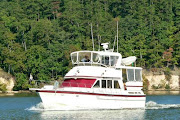
..no one does a thing about it. About what? The weather! This was an old jingle that a TV station used to market their weather segment when I was a teenager. Sort of like death & taxes the weather is an issue everyone is required to deal with on a fairly regular basis. It is just when things are going well, the sky is blue and the sun shining we tend to forget that it is "weather" and take it for granted, or at least I do. On those days I tend to take an attitude that is something like "yes, this is the way things were meant to be"! I love the sunshine and the rain that we have been experiencing the last month is getting me down, not to mention slowing us down.
As you might expect, given our lifestyle, the weather governs our day to day life in a fairly big way. For one thing we are outdoors quite a lot; I mean taking the trash out is not just a trip to the garage to drop the bag in the trash can it may mean a half-block walk, or at the extreme a half mile dinghy ride, to put the bag in a dumpster. It's no fun to schlep dirty cloths to the laundry room in the rain, and it is even worse to have it rain on nice freshly laundered sheets & towels.
Then there is the schedule. As you may have surmised we don't usually have a very rigid schedule but even our loose timing is affected by a month of rain, and it is not fun traveling in rain. Yes when we are operating the boat we are inside a covered enclosure but then there is the matter of transiting locks, at which time I have to leave that nice dry enclosure and go out into the rain and catch the bollard and tend the line. Generally on the river there is at least one lock each day and sometimes as many as 4 or five. There is also the matter of docking or anchoring, the big difference between the two is whether it's Larry or I who gets wet; if we are docking I am out handling the lines, if we are anchoring he is out setting the hook or raising it. Not only are thunderstorms no fun they are also potentially dangerous so we do our best to avoid them.
Our plan, such as it was, anticipated the customary nice warm mid-South September with generally clear dry days and cool evenings (good sleeping weather). It was our intent to use this lovely month to sample the beautiful anchorages On Watt's Bar and Guntersville Lake, if you have been checking in you already know how the September plan failed. We had also decided that if the hurricane situation allowed we would plan to arrive in Mobile on Halloween, thus avoiding the potential for frosty weather that can occur by mid-November in lower Mississippi & Alabama. This schedule would allow us time to spend a week in early October anchoring on Bay Springs Lake with a stop to check out the "waterfall anchorage" on Pickwick Lake as we went by.
We have wanted to try this anchorage for a couple of years and every time we go past there has been a reason that we can't/don't stop, this trip was no different. We had run in overcast weather through two locks that day and the forecast was for thunderstorms overnight, feeling that the waterfall anchorage would not afford adequate protection from the expected thunderstorms we found a different anchorage and hunkered down. It did indeed storm but we were protected on three sides by rock cliffs covered with trees so all we got was rain and a spectacular light show courtesy of Mother Nature.
The next day was bright and sunny as we left the Tennessee River astern and pointed our bow Southward on the Tenn-Tom Waterway to Bay Springs Lake. The forecast was for rain the following day and then a glorious stretch of fall weather. That forecast lasted for about a day. The rain arrived, on schedule, the day after we did it just never left. We stayed at Bay Springs 5 days and it rained 4 of them. We finally left and went to a marina near Fulton to visit friends who have bought a home there. We were lucky to make it through all 3 locks and get docked before the skies opened up and it poured rain for 12 hours.
As you might expect given the amount of rain the region has experienced in the past six weeks the ground is saturated so now the Tombigbee part of the Tenn-Tom is flooding (which you expect in the Spring but not in the fall). After 3 days in Fulton we made our way as far as Columbus where we will wait for the water to recede and the debris and trash to float on downstream and watch for a good opportunity to continue down to Mobile. We spent part of last winter here and coming back reminded us how much we missed the people here, the marina manager & staff just can't do enough for you.
Today the sun finally came out, first time we have seen it in over a week. The downside to that is that the strong and windy cold front which pushed out the rain also brought a chance of frost here tomorrow - so much for avoiding frosty weather!
Saturday, October 17, 2009
Saturday, October 3, 2009
We meet the nicest strangers, mostly
And then again some of them are just, well, a little strange. The most recent case in point was just yesterday at Joe Wheeler State Park in Rogersville, AL. In Alabama (as well as Tennessee & Kentucky) many State Parks have lodges and marinas as well as the usual camping & hiking. Our boat is docked near the lodge where guests with rooms on the water side can sit on their balcony and look out over the marina.
The other day as Larry was walking up to dispose of our trash some guys sitting out on a balcony called to him and he waved in response. One of the fellows called to him and asked if he was on "one of them boats out there", of course that led to a conversation. The guy said he had heard that people could "take them boats from here all the way to up to Canada and then come back here from up in Lake Michigan, is that true". Upon being assured that indeed it was not only true but that Larry had done just that he responded with, .."well I still don't believe it".
So as I said at the outset we meet the nicest strangers, I mean have you ever had that kind of conversation in a hotel lobby?
The other day as Larry was walking up to dispose of our trash some guys sitting out on a balcony called to him and he waved in response. One of the fellows called to him and asked if he was on "one of them boats out there", of course that led to a conversation. The guy said he had heard that people could "take them boats from here all the way to up to Canada and then come back here from up in Lake Michigan, is that true". Upon being assured that indeed it was not only true but that Larry had done just that he responded with, .."well I still don't believe it".
So as I said at the outset we meet the nicest strangers, I mean have you ever had that kind of conversation in a hotel lobby?
Saturday, September 26, 2009
All in all I'd rather have fog...
… over a thunderstorm, I mean. Not that I would ever want to start out in either of them but you know the old expression S*** Happens!
As unbelievable as it sounds in the 3+ years we have been aboard we had not, until yesterday, experienced traveling in a thunderstorm; while at anchor yes but not while running. I would like to say that it has been good planning on our part but rather I think that we have enjoyed some fine luck and yesterday it ran out!
Unless you have been living in a cave you have probably heard on the media about the rains in the Southeast. It has been raining for 2 weeks now across Alabama, Tennessee, Georgia and North Carolina. Aside from spoiling our plans to spend some nice September days hanging out in beautiful anchorages as we slowly made our way downriver we have experienced no real harm from the rain but it sure has been unpleasant. Mostly we have made our way from marina to marina (thankfully most of them had covered slips) on the good days (meaning it was only rain showers), and spent the worst days (monsoon type downpours & thunderstorms) sitting in those marinas listening to and watching the rain. Then we got in a hurry. Our budget had taken a bit of a hit from the unanticipated days in marinas and we knew we had some time at the marina at Joe Wheeler Park already paid for and waiting for us so we hurried along in spite of the forecast.
I mean it was only a 50% chance on Friday, not like 70% or anything! On top of that we set a very ambitious schedule of 100 miles and a lock for the day, meaning that we would not be off of the water early. We could have chosen a shorter travel day but we would have had to anchor overnight and the forecast for Saturday was for 90% chance so you can see our compulsion to move along. To compound things we got a bit of a late start because we had to wait for morning fog to burn off.
The day was going great; we got through the lock and were within 28 miles of our destination when things got ugly. As we were approaching Decatur, AL the sky took on a “rainy” sort of look but checking the radar we couldn’t see it, yet. We waited about 10 minutes for the railroad bridge to open and while waiting the sky began to look ominous, we listened to the NOAA forecast on the weather radio. Still they weren’t calling it. We cleared the bridge at 3:55 and continued on our way. At 4:00 NOAA sites a thunderstorm right where we were and issued a warning, a lot of good that did we could see the storm by that time. We were in a narrow channel and there was nothing to do but continue on, slowly. By 4:05 it was raining HARD and very windy; we couldn’t see a thing, just like when you are driving in a heavy rain – and then a big semi passes you. The waves popped right up to 1 ½ - 2 feet – on the river. Rain blew in through every little crack and I spent my time trying to stuff towels so that they would slow the water down and also wiping up to protect the electronics.
Thank goodness for radar and our navigation software that interfaces with our GPS to give us a picture and puts our little boat right on the chart. With these tools we can see the buoys and the other boats if there are any which, gratefully, there were not.
By 4:27 it was mostly over, the sky was lightening up ahead of us and the rain had slowed to a sprinkle and by 4:42 the sun was out again; nature’s fury was spent. Other than not being in such an all fired hurry and just spending a couple o’ more days at Goose Pond where we were quite comfortable there is not much we could have done to avoid this experience.
A couple of years ago we got caught in some sea fog out on the Georgia coast, I think I wrote about it in a travel update. After the storm yesterday I was thinking that the thunderstorm was much like the fog in that you can’t see anything which can be disorienting. But, in the fog you can hear because it is very still, whereas in a storm everything is making noise, the rain pounds, the waves pound or slosh, the thunder bumps and the boat. So all in all I think I prefer fog – today at least.
As unbelievable as it sounds in the 3+ years we have been aboard we had not, until yesterday, experienced traveling in a thunderstorm; while at anchor yes but not while running. I would like to say that it has been good planning on our part but rather I think that we have enjoyed some fine luck and yesterday it ran out!
Unless you have been living in a cave you have probably heard on the media about the rains in the Southeast. It has been raining for 2 weeks now across Alabama, Tennessee, Georgia and North Carolina. Aside from spoiling our plans to spend some nice September days hanging out in beautiful anchorages as we slowly made our way downriver we have experienced no real harm from the rain but it sure has been unpleasant. Mostly we have made our way from marina to marina (thankfully most of them had covered slips) on the good days (meaning it was only rain showers), and spent the worst days (monsoon type downpours & thunderstorms) sitting in those marinas listening to and watching the rain. Then we got in a hurry. Our budget had taken a bit of a hit from the unanticipated days in marinas and we knew we had some time at the marina at Joe Wheeler Park already paid for and waiting for us so we hurried along in spite of the forecast.
I mean it was only a 50% chance on Friday, not like 70% or anything! On top of that we set a very ambitious schedule of 100 miles and a lock for the day, meaning that we would not be off of the water early. We could have chosen a shorter travel day but we would have had to anchor overnight and the forecast for Saturday was for 90% chance so you can see our compulsion to move along. To compound things we got a bit of a late start because we had to wait for morning fog to burn off.
The day was going great; we got through the lock and were within 28 miles of our destination when things got ugly. As we were approaching Decatur, AL the sky took on a “rainy” sort of look but checking the radar we couldn’t see it, yet. We waited about 10 minutes for the railroad bridge to open and while waiting the sky began to look ominous, we listened to the NOAA forecast on the weather radio. Still they weren’t calling it. We cleared the bridge at 3:55 and continued on our way. At 4:00 NOAA sites a thunderstorm right where we were and issued a warning, a lot of good that did we could see the storm by that time. We were in a narrow channel and there was nothing to do but continue on, slowly. By 4:05 it was raining HARD and very windy; we couldn’t see a thing, just like when you are driving in a heavy rain – and then a big semi passes you. The waves popped right up to 1 ½ - 2 feet – on the river. Rain blew in through every little crack and I spent my time trying to stuff towels so that they would slow the water down and also wiping up to protect the electronics.
Thank goodness for radar and our navigation software that interfaces with our GPS to give us a picture and puts our little boat right on the chart. With these tools we can see the buoys and the other boats if there are any which, gratefully, there were not.
By 4:27 it was mostly over, the sky was lightening up ahead of us and the rain had slowed to a sprinkle and by 4:42 the sun was out again; nature’s fury was spent. Other than not being in such an all fired hurry and just spending a couple o’ more days at Goose Pond where we were quite comfortable there is not much we could have done to avoid this experience.
A couple of years ago we got caught in some sea fog out on the Georgia coast, I think I wrote about it in a travel update. After the storm yesterday I was thinking that the thunderstorm was much like the fog in that you can’t see anything which can be disorienting. But, in the fog you can hear because it is very still, whereas in a storm everything is making noise, the rain pounds, the waves pound or slosh, the thunder bumps and the boat. So all in all I think I prefer fog – today at least.
Sunday, September 20, 2009
The Scopes Monkey Trial
Along the waterways we seem to discover the most arcane little pieces of history. The tiny town of Dayton, Tennessee offered up just such a prize (as well as some great honey at the Farmer's Market). It was also a reminder that things aren’t always what they appear to be. If you remember hearing about the Scopes Monkey Trial, as I did when I searched through the fuzzy files in the gray matter, then read on to learn more.
Apparently in the early 20th century Dayton was a big mining center and as such became a large and thriving commercial area that provided for the needs of the miners and their families. Due to a series of explosions the mine was shut down and the town was languishing, businesses were closing, hotels were shuttered, things were grim.
Around this time schools around the country had begun teaching evolution. In January of 1925 a Tennessee state legislator, worried that his children would be corrupted by such teaching, introduced a bill to prohibit the teaching of evolution in the schools of the state and it becomes law.
In May of 1925 the ACLU placed an announcement in the Chattanooga Times
In which they offered to pay the expenses of a teacher willing to make a test case of the new law. A civic leader and promoter from Dayton saw the announcement and was quick to sense an opportunity to remedy the limping economy of the town. He hurried to discuss the matter with the owner of the local drugstore, the judge and the superintendent of schools. A young math teacher, John Scopes, was recruited and agreed to participate. How, you may ask, can a math teacher teach evolution? Well it seems that Mr. Scopes had, on a few occasions, substituted for the biology teacher; and besides they were mainly looking for any teacher willing to agree to participate in making a test case. Thus the “trial of the century” began as something of a publicity stunt to revive the fortunes of the town of Dayton.
Ultimately some of the best legal minds in the country participated in the spectacle. Famed orator and three time presidential candidate Williams Jennings Bryan served as the chief prosecutor and Clarence Darrow as the lead defense counsel.
Sensing that Dayton was going to get a lot of publicity Chattanooga tried, in vain, to have the trial moved to the city but Dayton outfoxed them and the trial was held in Dayton. It was the first national broadcast of an American trial with radio station WGN. Over 200 reporters thronged the press box, and 65 telegraph operators moved in and began sending more words to Europe and Australia than had ever before been cabled about any other American happening.
Read more accounts of the Scopes Monkey Trial at these links. Rhea County Courthouse was the site of the trial and today there is quite a little museum in the courthouse basement, the docent there was eager to share this bit of Dayton’s history. The most ironic thing is that both the prosecution and the defense wanted Scopes found guilty. The reason for this was that the ACLU (remember their announcement is what started this ball rolling) wanted a test case to take to a higher Court. In fact the Tennessee Supreme court did uphold the constitutionality of the law but reversed Scopes’ conviction on a technicality. The original plan to revive Dayton was certainly successful as the newsmen flocked to Dayton, they filled the empty hotels and many stayed with local residents who proved room and board.
In the aftermath of the trial John Scopes who had become the “forgotten man” in the entire production left Dayton, studied geology at the University of Chicago and worked for an oil company in South America before moving to Louisiana where he died in 1970. Bryan died five days after the verdict while he was still in Dayton. The citizens of Dayton initiated a memorial university to honor Bryan’s life and in an ironic twist the doors of “Williams Jennings Bryan University” (now Bryan College) were opened in 1930 in the old high school building where John Scopes had supposedly taught evolution.
Apparently in the early 20th century Dayton was a big mining center and as such became a large and thriving commercial area that provided for the needs of the miners and their families. Due to a series of explosions the mine was shut down and the town was languishing, businesses were closing, hotels were shuttered, things were grim.
Around this time schools around the country had begun teaching evolution. In January of 1925 a Tennessee state legislator, worried that his children would be corrupted by such teaching, introduced a bill to prohibit the teaching of evolution in the schools of the state and it becomes law.
In May of 1925 the ACLU placed an announcement in the Chattanooga Times
In which they offered to pay the expenses of a teacher willing to make a test case of the new law. A civic leader and promoter from Dayton saw the announcement and was quick to sense an opportunity to remedy the limping economy of the town. He hurried to discuss the matter with the owner of the local drugstore, the judge and the superintendent of schools. A young math teacher, John Scopes, was recruited and agreed to participate. How, you may ask, can a math teacher teach evolution? Well it seems that Mr. Scopes had, on a few occasions, substituted for the biology teacher; and besides they were mainly looking for any teacher willing to agree to participate in making a test case. Thus the “trial of the century” began as something of a publicity stunt to revive the fortunes of the town of Dayton.
Ultimately some of the best legal minds in the country participated in the spectacle. Famed orator and three time presidential candidate Williams Jennings Bryan served as the chief prosecutor and Clarence Darrow as the lead defense counsel.
Sensing that Dayton was going to get a lot of publicity Chattanooga tried, in vain, to have the trial moved to the city but Dayton outfoxed them and the trial was held in Dayton. It was the first national broadcast of an American trial with radio station WGN. Over 200 reporters thronged the press box, and 65 telegraph operators moved in and began sending more words to Europe and Australia than had ever before been cabled about any other American happening.
Read more accounts of the Scopes Monkey Trial at these links. Rhea County Courthouse was the site of the trial and today there is quite a little museum in the courthouse basement, the docent there was eager to share this bit of Dayton’s history. The most ironic thing is that both the prosecution and the defense wanted Scopes found guilty. The reason for this was that the ACLU (remember their announcement is what started this ball rolling) wanted a test case to take to a higher Court. In fact the Tennessee Supreme court did uphold the constitutionality of the law but reversed Scopes’ conviction on a technicality. The original plan to revive Dayton was certainly successful as the newsmen flocked to Dayton, they filled the empty hotels and many stayed with local residents who proved room and board.
In the aftermath of the trial John Scopes who had become the “forgotten man” in the entire production left Dayton, studied geology at the University of Chicago and worked for an oil company in South America before moving to Louisiana where he died in 1970. Bryan died five days after the verdict while he was still in Dayton. The citizens of Dayton initiated a memorial university to honor Bryan’s life and in an ironic twist the doors of “Williams Jennings Bryan University” (now Bryan College) were opened in 1930 in the old high school building where John Scopes had supposedly taught evolution.
Sequoyah and the Cherokee Language
One of the interesting things we have learned about in this region is the importance of the Cherokee Civilization and one of the most interesting things about the Cherokee is that they had a written language by the early 1800’s; more on that in a bit. In the late 18th century the Cherokee had many serious conflicts with white settlers who, the Cherokee felt, were encroaching on their tribal hunting lands. By around 1795 those conflicts had mostly ended and the pressures of the flood of white settlers dictated changes in the tribe’s political organization. After the cessation of hostilities with the whites the Cherokees experienced rapid acculturation and prosperity.
By the 1820’s the Cherokee had created a form of government that sounds eerily familiar. They elected a principal chief as well as a deputy chief and established a two house legislature as well as judicial districts; each district had a judge and a sheriff. They also had established a supreme court, and a constitutional government.
You may recall that in 1838 the Cherokee Nation was removed from their homeland in Tennessee and resettled in Oklahoma with the forced march now know as the “Trail of Tears”. Not knowing much about this resettlement we were interested when we found out that the Sequoyah Birthplace Museum was right across the Little Tennessee River from our marina near Vonore, TN. Our visit there provided a fascinating look at Cherokee culture, language development, and some information on the resettlement.
Around 1776 an Indian woman named Wurteh, of a family that was of high rank in the Nation, gave birth to a son whose father was a white trader named Nathanial Gist. In the Cherokee tradition the lineage passes through the Mother’s clan however the boy was given the name of George Gist. It was not uncommon for Cherokee men of that era to be given a white name and an Indian name; this baby was also called Sequoyah. Abandoned by his father shortly after birth he was raised by his prosperous Mother and developed skills in managing her dairy and horse herds. As a young man he fought for the United States in the War of 1812. During his adult life he often made a living as a silversmith.
Sequoyah was intrigued by the “talking leaves” of the whites and thought that there were advantages in being able to retain thoughts on paper. Shortly after the end of the War of 1812 he was married and around this time he set about creating a writing system for the Cherokee language. Not being a learned man he was overwhelmed and frustrated with the complexity of the work. At some point his wife and neighbors (apparently feeling that his efforts may make them look foolish) destroyed his books and papers representing several years work. Sequoyah persevered and in 1821 he completed the Cherokee syllabary; within a year thousands of Cherokees became literate. In 1827 the tribe purchased a printing press and in February of 1828 the first Cherokee language newspaper, the Cherokee Phoenix, was printed. This newspaper was printed weekly until the press was confiscated by the State of Georgia in 1834 because of anti-removal editorials.
In 1847, three years after Sequoyah’s death, the Austrian Stephen Endlich conferred the name Sequoyah on the majestic California redwoods. In an ironic touch the State of Georgia erected a memorial to him in 1927 it is located in Calhoun, not far from the print shop that produced tens of thousand of pages of literature in Cherokee before Georgia confiscated the press. In 1917 the State of Oklahoma placed a statue of Sequoyah in Statuary Hall in the U.S. Capitol. Quite a memorial to a man who believed in the power of the written word!
By the 1820’s the Cherokee had created a form of government that sounds eerily familiar. They elected a principal chief as well as a deputy chief and established a two house legislature as well as judicial districts; each district had a judge and a sheriff. They also had established a supreme court, and a constitutional government.
You may recall that in 1838 the Cherokee Nation was removed from their homeland in Tennessee and resettled in Oklahoma with the forced march now know as the “Trail of Tears”. Not knowing much about this resettlement we were interested when we found out that the Sequoyah Birthplace Museum was right across the Little Tennessee River from our marina near Vonore, TN. Our visit there provided a fascinating look at Cherokee culture, language development, and some information on the resettlement.
Around 1776 an Indian woman named Wurteh, of a family that was of high rank in the Nation, gave birth to a son whose father was a white trader named Nathanial Gist. In the Cherokee tradition the lineage passes through the Mother’s clan however the boy was given the name of George Gist. It was not uncommon for Cherokee men of that era to be given a white name and an Indian name; this baby was also called Sequoyah. Abandoned by his father shortly after birth he was raised by his prosperous Mother and developed skills in managing her dairy and horse herds. As a young man he fought for the United States in the War of 1812. During his adult life he often made a living as a silversmith.
Sequoyah was intrigued by the “talking leaves” of the whites and thought that there were advantages in being able to retain thoughts on paper. Shortly after the end of the War of 1812 he was married and around this time he set about creating a writing system for the Cherokee language. Not being a learned man he was overwhelmed and frustrated with the complexity of the work. At some point his wife and neighbors (apparently feeling that his efforts may make them look foolish) destroyed his books and papers representing several years work. Sequoyah persevered and in 1821 he completed the Cherokee syllabary; within a year thousands of Cherokees became literate. In 1827 the tribe purchased a printing press and in February of 1828 the first Cherokee language newspaper, the Cherokee Phoenix, was printed. This newspaper was printed weekly until the press was confiscated by the State of Georgia in 1834 because of anti-removal editorials.
In 1847, three years after Sequoyah’s death, the Austrian Stephen Endlich conferred the name Sequoyah on the majestic California redwoods. In an ironic touch the State of Georgia erected a memorial to him in 1927 it is located in Calhoun, not far from the print shop that produced tens of thousand of pages of literature in Cherokee before Georgia confiscated the press. In 1917 the State of Oklahoma placed a statue of Sequoyah in Statuary Hall in the U.S. Capitol. Quite a memorial to a man who believed in the power of the written word!
More Pictures of Lauren & Anna
Okay, in the interests of accuracy I must confess that we didn't "just return" from vacation, in fact we have been back for nearly three weeks now. Yes I understand that at least part of the purpose of a blog is to keep others up to date on what is happening with us but I am just not always willing to take the time to get my thoughts organized enough to share them - or my pictures!.
In my defense I am also a bit slow because we had company aboard a few days after we arrived home and then I have had very slow connections via our air card. It takes a fairly quick connection to post photos and so I had a good excuse for procrastinating.
The past week has been rainy and we have mostly hunkered down, first in anchorages and then in a marina with no wi-fi and now, finally, in a marina just above Chattanooga where I have the double benefit of the air card being fast and a fast wi-fi connection. As we hope to leave here tomorrow I am taking advantage of this windfall of fast connections to send a few more pictures of Lauren and Anna that we took on our recent trip.


In my defense I am also a bit slow because we had company aboard a few days after we arrived home and then I have had very slow connections via our air card. It takes a fairly quick connection to post photos and so I had a good excuse for procrastinating.
The past week has been rainy and we have mostly hunkered down, first in anchorages and then in a marina with no wi-fi and now, finally, in a marina just above Chattanooga where I have the double benefit of the air card being fast and a fast wi-fi connection. As we hope to leave here tomorrow I am taking advantage of this windfall of fast connections to send a few more pictures of Lauren and Anna that we took on our recent trip.
Is she cute or what?

Making a point to Daddy


Sharing a moment with Grandpa
I love this shot in spite of the fact that Lauren has a red "mustache" from a Popsicle

Magnificent Cathedrals

A couple of years ago when we were in the Chesapeake, my goodness I can hardly believe it was that long ago. Anyway while we were in Baltimore and Washington we visited two beautiful Cathedrals . In Baltimore the Basilica of the Assumption was the first Cathedral that the Catholic Church built in America. It is a spectacular structure, light and airy and welcoming. Built in the neo-classical design favored by Thomas Jefferson it is, today, considered one of the finest examples of neoclassical architecture in the world and has been declared a National Historic Landmark.

No trip to Washington would be complete without a stop at the National Cathedral which many of us have seen on television. Built in the Gothic style it is dark and awe inspiring. It is a much newer structure than the Basilica; one of the stained glass windows even has a rock from the moon embedded.
Both are architecturally significant, both are beautiful, no doubt about it they are two spectacular houses of worship. I am not a particularly well-traveled person, and I have never seen many of the beautiful churches that are built around the world. In spite of the foregoing disclaimer I hereby submit my nomination for the most magnificent cathedral of them all -


Most people know that I am not particularly religious but I find this tiny little chapel to be an awe inspiring and peaceful place. Perhaps not a cathedral in the strict definition of the word but certainly a special place for reflection and worship set in the great Cathedral of Nature.

No trip to Washington would be complete without a stop at the National Cathedral which many of us have seen on television. Built in the Gothic style it is dark and awe inspiring. It is a much newer structure than the Basilica; one of the stained glass windows even has a rock from the moon embedded.
Both are architecturally significant, both are beautiful, no doubt about it they are two spectacular houses of worship. I am not a particularly well-traveled person, and I have never seen many of the beautiful churches that are built around the world. In spite of the foregoing disclaimer I hereby submit my nomination for the most magnificent cathedral of them all -
The Chapel of the Transfiguration in Grand Teton National Park.

This humble little chapel was built in 1925 on land donated by a local resident. The architecture, as you can see, is unremarkable, the materials simply wood that was no doubt felled and hewn near the site. A few wooden pews and a plain wooden alter complete the interior adornment, nothing lavish; until you sit in the pews and look up to the altar. Then the full majesty of God’s creation spreads out before you.

Most people know that I am not particularly religious but I find this tiny little chapel to be an awe inspiring and peaceful place. Perhaps not a cathedral in the strict definition of the word but certainly a special place for reflection and worship set in the great Cathedral of Nature.
Subscribe to:
Posts (Atom)